
BLOG
Insights and Updates
Expert analysis on stress testing methodology, regulatory developments, model risk management, and the future of institutional risk intelligence.


AI Stress Testing for Financial Models: Beyond Historical Replay
Financial stress testing has gone through three generations. The first was manual. The second was historical replay. The third uses AI to generate scenarios that never occurred but plausibly could — testing models against the conditions history was too short to supply. Here's what AI stress testing actually means in 2026.


AI Model Governance for Financial Institutions: The 2026 Regulatory Landscape
SR 26-2 replaced fifteen-year-old model risk guidance and explicitly excluded generative and agentic AI from scope. That exclusion is not a free pass — it's a governance gap institutions now own without a template. Here's the 2026 regulatory landscape, what governance actually requires, and where most institutions stand.

SEC Form PF Stress Test Requirements: What Hedge Fund Advisers Need to Know in 2026
Form PF is often called a stress test — but it isn't one. It's a reporting obligation: large hedge fund advisers must report stress events like sharp losses or redemption waves within 72 hours. Here's what triggers a filing, the thresholds that matter, and why the 2026 rollback changes everything.
AIFMD Liquidity Stress Testing Requirements: Complete Guide
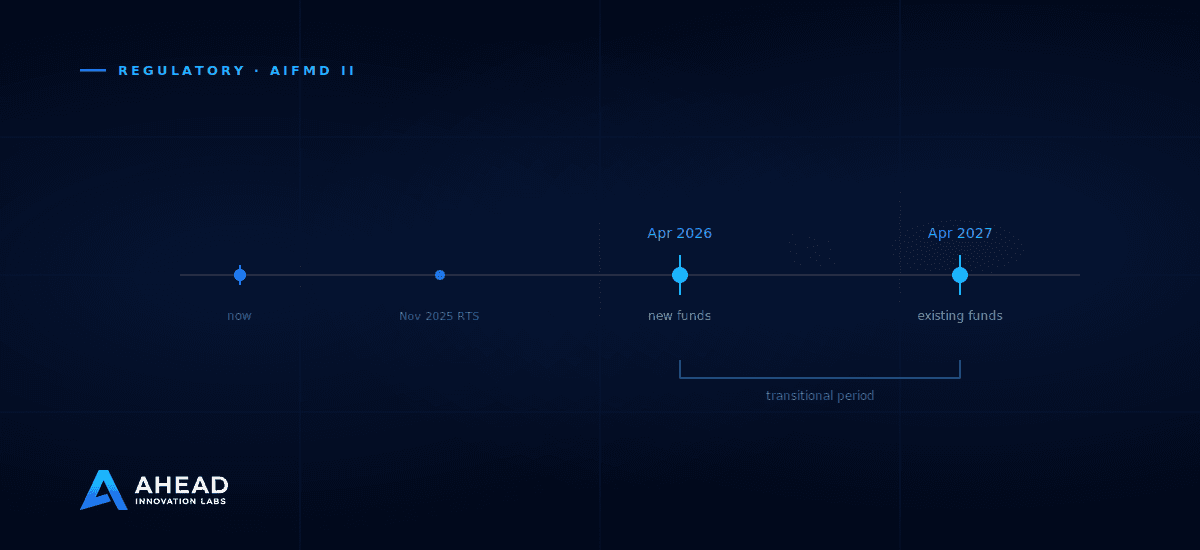
AIFMD II's liquidity management tool rules are now in force, with the core selection requirement applying to every open-ended fund — new and existing — from April 16, 2026. Here's what AIFMD actually requires for liquidity stress testing, what's changed, and why your LST methodology now feeds directly into a binding compliance decision.

SR 11-7 Replacement: The New MRM Framework Explained
SR 11-7 governed model risk for fifteen years. SR 26-2 replaces it with six concrete changes — a narrower model definition, risk-based validation cadence, more flexible validator independence, a shift to non-binding guidance, a scope weighted toward larger institutions, and an explicit AI carve-out. Here's what each change means in practice for your MRM program.

Why Backtesting Is Not Enough for Risk Management
Backtesting answers one question well: did this work before? It was never designed to answer the question that matters just as much — would it survive something new? Here's where backtesting structurally falls short, and what forward-looking risk teams add alongside it.
Research Infrastructure for Markets Beyond Historical Data
Diffusion-based generative models that simulate realistic cross-asset market environments, enabling robust strategy validation beyond the limits of history.
Book a Demo